Attacks in New York and Washington on 9 11 by a network of operatives from Al Qaeda changed America’s perspective on the terrorist threat. The Pentagon, the nerve center of American military operations around the world, and the twin towers, symbols of America’s global economic power lay in ruins. Osama Bin Laden, the mastermind behind the attacks, was reportedly shocked and surprised by the level of damage done by the hijackers. The attacks become emblematic of a global terrorist threat, aimed not only at America but all corners of the world.
The 3000 killed during these attacks were added to the brutal litany of terroriism’s grim statistics around the world. Over 23,000 killed by the Shining Path in Peru, 9000 in Northern Ireland ‘s bloodiest years, 12,000 in the Middle East, 5000 in Tamil Tigers operations in Sri Lanka and countless others in Africa, Chechnya, India and Pakistan, across Europe. The numbers increase every year, in a war that no one declared and no one knows how to end.
The mysterious face of the terrorist, and the clandestine nature of counter terrorism operations hint at a secret world, one visible only in brief flashes of violence. The stories, myths and voices of the terrorist world are relatively unknown, despite terrorism occupying such a dominant position in political discourses and cultural imagery. Even though other forms of political violence have higher casualty figures or cause more devastating long term impacts, terrorism as a political narrative has a uniquely compelling fascination.
Human beings respond to narratives. This aspect of our being is hard wired into us – we understand the world through the stories we tell about it. Terrorism is replete with stories, communications and narratives crafted by terrorist organisations, governments and media observers.
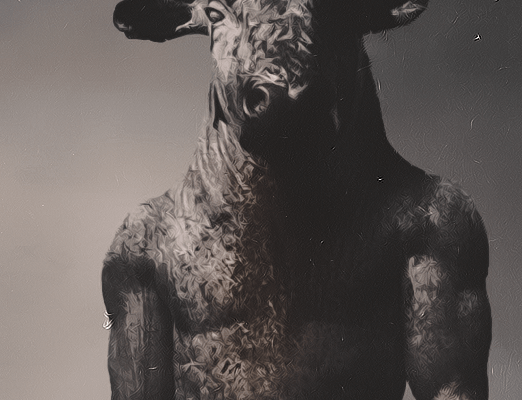
If Jung could recognise the validity and resonance of enduring archetypes and myths in human understanding, so too can writers see in the stories of terrorism clear lines and unfolding narratives that illuminate the linkage between violence and identity. Identity is complex, multi-faceted and labyrinthine, and at the centre of our understanding of terrorism. Identity like the Minotaur in its maze, is a search for meaning, source, belonging and history. In Dante’s Inferno, the Minotaur is the symbol and guardian of the world of violence; he stands for the men of blood. In myth, the Minotaur represents the hybrid man-beast inflicting terror and demanding blood sacrifices. The Minotaur is an apt metaphor for contemporary terrorism with its labyrinthine underground connections and its adulation of the blood sacrifice as a way to generate meaning and identity. The Minotaur is a profoundly resonant story about the human relationship with violence, loss, and fear.
The cultural and social narratives provided by Al Qaeda, Boko Haram, ISIS, and Hamas offer an alternative, more structured world view to populations who feel adrift where they are now. In deeply fractured societies or in regions where modernity has not delivered economic growth or widely dispensed resources, terrorist groups function as alternative sources of legitimacy, belonging, and social representation for disaffected populations. In the wider world, terrorism appeals to isolated groups. These may be enclave communities in secular societies, they may be immigrant groups who have neither assimilated nor been able to access the labour and educational opportunities around them, or they may be younger generation immigrants who were born in Europe or America or Canada who feel unable to participate in the wider societies around them for a number of reasons. The creation of an alternative secret narrative of belonging, identity and greater meaning gives them a sense of stability and inclusion that is missing.
Hidden narratives also provide fertile base material for constructing personal identities that are rich with significance, purpose and core stability. There is currently a global identity crisis, with many millions searching for personal voice and purpose in a world that has been digitized, corporate and impersonal for decades. The early promise of the internet as a global connection has disappeared in the reality of online bullying, disinformation, and increasingly violent and polarising content amplified by swarm behaviours and the algorithms that follow them. Relationships and jobs are transient, old social structures and norms are cracking apart, and the divide between those who have access to wealth and health and those who do not is increasing exponentially. Alternative currents that would once have been considered marginal or on the fringes of acceptable society are appearing in the mainstream of western societies. In the case of those who chose the path of terrorism or violence through membership in global jihadi or nihilist movements, Al Qaeda or Islamic Jihad represent ‘home’ in a world that does not seem to hold any other place to belong. Violence is a language all humans understand at some fundamental level.
Terrorism is a particular kind of violence, one that derives its power from its randomness, confusion of the categories of innocence and guilt, and its aspect of communicative intent. The main purpose of terrorism is to shock, to cause random damage and hurt, and to communicate to an audience wider than the immediate victims. Within a terrorist group, violent acts create cohesion, reinforce leadership,and shift out true believers from non-believers. They may also signal part of internal power struggles within the group over direction, ethos or use of violence. Al-Qaeda in particular has been undergoing brutal power struggles between Al Qaeda in the Arabian Peninsula and Al Qaeda in the Maghreb over control of the vast global assets, logistics and political messages of the jihadi movement.
What fuels Al Qaeda and Islamic Jhad is a narrative of grievance, disempowerment and eventual victory. The use of violence, whether it is terrorism, civil conflict, internal killings or torture, fits into a spectrum that was outlined in the seven stage plan leading to the eventual establishment of an Islamic Caliphate. At present, events in Syria, Iraq and the widening of the attacks across the Middle East and Europe indicate the jihadi movement is in stage four. Classic terrorism theory would describe events as being indicative that a terrorist group is focusing on degrading its host society to provoke an over reaction against the population and thereby hastening the end of the hated regime and the establishment of a new political order. Decades ago, authors like Walter Lacquerer and James Denardo wrote about the impact of terrorists and guerilla fighters fanning out amongst the population and carrying out random attacks to provoke a crackdown by authorities that erodes its moral and political authority and allows the terrorist to move into the power vacuum that results from such an over reaction. In the story of the Minotaur, the man creature with the bull’s head is a symbol of aggression, power, secrecy, blood sacrifice and domination. Minos demands human sacrifices from the defeated Athenians and his fierceness and power come from the random fear his presence creates. Minos was born from deception and betrayal, imprisoned in the labyrinthe because his presence was so fearsome he must be kept from sight, and the man who eventually slays him is himself the subject of misunderstandings and terrors. Minos is associated with brutality, violence and terror.
Terrorism, unlike other forms of political violence, is primarily a communicative violence, whether by text, deed or impact. It tells a story that places violence and fear as the primary source of meaning, and its randomness shatters categories of safety and belonging. Al Qaeda, Boko Haram and Daesh, among so many other groups, are telling a story of violence and belonging, of labyrinthine worlds that demand sacrifice but convey identity and meaning. Terror happens in small ways when we shame and hurt another, when we create social and religious categories that are based on hierarchical definitions of belonging, when we say that another is less human than we are because of the colour of their skin or the way they kneel before their gods. The terrorism that blows apart cities, airports and citizens of the world is the furtherest end of a spectrum that begins with defining identity by who belongs and who does not. The Caliphate envisioned within the Al Qaeda plan is one that is for true believers only, those who submit to the Minotaur’s interpretation; it holds no space for diversity, difference, questioning, experimentation with the social experience, or imagination without boundaries. The Minotaur is an allegorical emblem to understand and describe a terror that seems senseless and frightening but like all myths, it tells us something of who we are as a species and how we experience our fellow human beings. The Stories of the Minotaur are the stories that use violence as a framing device: they are linear, simple, and often profoundly mendacious.
 hollow places