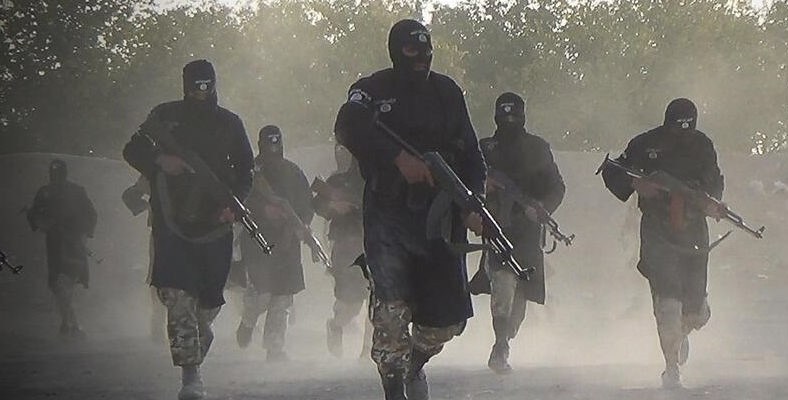
Terrorism is text, whether it is the printed pamphlets of Sendero Luminoso or the PLO in the 1970s, messages delivered by hooded IRA spokesmen at hastily arranged news conferences in Belfast, or Al-Qaeda leaders issuing proclamations, videos of Osama Bin Laden discussing attacks or pro-violence websites extolling supporters to participate in violence. People do not commit political violence without some form of narrative; they must talk themselves into it. The Unabomber wrote long tracts outlining his reasons for sending bombs through the post; Aum Shin Rikyo leader Shoko Ashahara had written several books on the link between violence and redemption prior to the 1995 Tokyo sarin gas attacks; ETA have produced volumes of political writings since they were formed in 1959. Hamas, ISIS, and Hezbelloh have sophisticated social media strategies that use audience segmentation to calibrate messages that its digital audiences will amplify across platforms.
Terrorism requires an accompanying text to explain, justify and contextualise the violence. Without it, the actions that make up terrorism – the assassinations, bombings and hijackings – are merely so many criminal acts. During the 1972 Olympics in Munich, members of a Palestinian terrorist group held Israeli athletes hostage. Despite being a military and strategic failure, the Munich attack drew international attention and thrust the Palestinian cause onto the world as nothing before had been able to do. The 1972 Munich attack is pivotal for three reasons.
- Drama and Media Attention
The first was in the way the Munich attack revealed that dramatic attacks could capture media attention for a cause when diplomats, writers, aid workers and campaigners all failed to do so. Munich drew the attention of four thousand print and radio journalists, two thousand television journalists and an estimated 900 million people worldwide. Crelinsten suggests that 1972 marked a turning point in the way the media framed political violence. The media began to use “terrorism” as “a key term that captured the essence and the intrigue of violent responses to nationally and internationally intractable political problems.
- Linkage of Regional to International Events
The second effect was directly related. It was impossible to ignore the seriousness and determination of the Palestinian movement or to deny that their cause was more than just a question of regional security for Israel. By moving to an international arena, Black September “violently demonstrated” the intent to “command the attention of the more powerful, to display the seriousness of [their] purpose and display the ruthlessness of [their] will to those who [they] think will respect a show of strength” even if that audience is appalled by the violence. The Munich attack functioned, from the perspective of the Palestinian movement, as a sacrificial expression of violence that evoked questions of legitimacy, order, interpretation and identity.
- Model for Future Attacks
The third effect was the creation of a powerful exemplar for other groups with “a burning sense of injustice and dispossession alongside a belief that through international terrorism they too could finally attract world-wide attention”. As the Munich attack proved, terrorism requires the presence of an audience who can be outraged or horrified by the senseless act of violence perpetrated against innocent bystanders.
Terrorism as Communication
The trinity of victim, perpetrator and audience has been described by David Riches as a contest over the ownership and meaning of the violence. This approach has been further expanded by Martha Crenshaw and others to illuminate in detail the communicative aspects of terrorism, in essence terrorism as the vehicle for a message. When Black September carried out an attack, there was no mistaking the intent and context of their actions, namely to draw attention the Palestinian cause. When Abu Sayaff planted bombs in Manila in 1991 it signaled both a split from the more moderate policies of the Moro Liberation Front and the group’s intention to focus on violence as a means of creating a separatist Islamic state in the Philippines. When the Houthis held as ship hostage in the Red Sea for 14 months, as a protest in support of Hamas operations against Israel, it signaled that the Iranian led “Arc of Resistance” transcended borders.
The levels of violence, the randomness, the civilian targets frame terrorism as “a dark and violent text” with connotations of savagery and inhumanity. The Unabomber described his own impact on the world as “you couldn’t figure me out then and you can’t figure me out now”. This approach assumes a singularity of reading, as if every encounter between authority and terrorism is a zero-sum game, a contest between order and chaos. It suggests, in the words of criminal profilers, that the scene of the crime is synonymous with the profile of the perpetrator. The analysis begins and ends with the contest between right and wrong uses of political violence. Much of the post 11 September analysis of terrorism has focused on the illegitimate use of violence by Al-Qaeda. For example, Charles Hill notes that “terrorism is the ultimate assault weapon against the state” while Paul Kennedy identifies Al-Qaeda as “an amoeba-like foe, which attacks from within and through civilian instruments and in a decentralised and shadowy form”.
Instrumental and Symbolic Violence
If terrorism is letters etched in fire and blood, there must exist a means of deciphering the meaning, of understanding why violence can serve as a vehicle for a wider message and just what that message is. David Riches, in The Anthropology of Violence, suggests that violence serves both instrumental (functional) and symbolic (communicative) ends. The analytical and operational demands of conducting terrorism, whether as an individual act or a sustained campaign, demand rational, objective and clear headed thinking. The planning and logistics of this form of political violence define it as an instrumental act. When Hezbollah holds Americans hostage in the Bekaa Valley, it sends a powerful message to the US about its own strength, intent and authority and American weakness in the region. Simultaneously, Hezbollah carves out a position in the turf wars of Lebanese politics and in the wider Shia community by taking on one of the world’s largest economic and military powers.
Crenshaw concentrates on the communicative aspects of terrorism, tracing how the original ‘cause’ is played out from engendering conditions (frustration, political injustice), direct participants (marginalised ethnic groups, politically quiescent groups such as the Lebanese Shia) to the groups’ reason for resorting to terrorism (revolutionary commitment such as the creation of a global Shia theocracy, desire for publicity, provocation by government activities) and the individual’s motivation and mindset about violence. Dealing with both the purposeful and the purposeless dimensions of terrorist acts places it squarely in the realm of symbolic violence. Thornton first recognised the symbolic nature of terrorism in the 1960s, explaining that “the terrorist act is intended and perceived as symbolic” while later analysts such as Crenshaw and Lomasky focused on the way terrorism can be used to express support for political causes, even when tactical outcome may be uncertain. There is little tactical advantage in holding US academics or businessmen hostage but Hezbollah views hostage taking as a strategy with multiple symbolic advantages for its local base and for the wider Arc of Resistance.
Core Purpose
Riches further suggests that an act of violence, including a terrorist act, will normally have several purposes but one core overriding purpose which defines it. To discover the core purpose it is necessary to look at the political relations between the perpetrators and the audience, focusing on coercive and controlling power relations and at how legitimacy, boundaries and acceptable levels of violence are understood by these actors. The importance of identifying the core purpose is that, among violence’s many possible aims, it is the means by which legitimacy will ultimately be argued. Does the experience of genocide and exile, for example, justify the use of terrorism by the Armenian Secret Army for the Liberation of Armenia (ASALA)? In 1973, two Turkish diplomats were assassinated in Los Angeles by a survivor of the 1915 Armenian Genocide. The same year, the ASALA was established in Beirut to carry out attacks in support of drawing attention to the Genocide. The ASALA, like the Red Army Faction, the Red Brigades and others had noted the lessons of the 1972 Munich attacks by Black September. Terrorism functions as vehicle for a message with wider resonance beyond that of perpetrator and victim. The international community, the US, Turkey, and the survivors of the Genocide and Diaspora form the audience for an attack by the ASALA. Each audience reads differently into the attack: for Turkey it is an assault, for the diaspora it is a promise that the event will not be lost to history, and for supporters of ASALA, it is a rallying cry.
Terrorism as Political Text
The ASALA was supported, politically and logistically by Palestinian groups as were many European and South American groups. During the 1970s and early 1980s, the spread of global terrorism linked to revolutionary and nationalist movements was considered second only to the threat of nuclear war in lethality. Since the 1990s, terrorism has been dominated by Islamic jihadi narratives and the range of targets has moved from the strategic to the expressive. There is almost no tactical value in striking a cartoonist magazine in Paris or in attacking European cities, but there is enormous benefit within the wider jihadi networks.
The power of terrorism as strategy and concept comes from its deforming and reforming characteristics, its breakdown of boundaries, its challenge to fixed notions of combatant and innocent and its reinforcement of the demarcation between the centre and the peripheries while challenging the legitimacy and truth of those divisions. As the PLO, PFLP and the Palestinian groups carried out hijackings and bombings, any group associated with them automatically assumed an international revolutionary aura. Their actions and pronouncements were taken seriously and given extensive media coverage. Regardless of a government’s response – silence to avoid conferring any meaning or militant reaction to make carrying out terrorist acts difficult – it was impossible to avoid endowing terrorism with an aura of political legitimacy and significance.
Terrorism draws its most useful angles from its association with disorder and destruction. It provides a central and recognisable core of elements including the co-option of identity and its use to break boundaries and create alternative centres of authority and legitimacy. Despite its association with randomness, disorder and destruction, terrorism coalesces multiple narratives into a simple linear interpretation. There are dozens of jihadi groups across the world, but, regardless of their regions and ideologies, the overarching narrative is one of Islamic resurgence and the defeat of enemies through the use of violence. The incorporation of these elements allows terrorism, which is after all outlawed activity, to be used as a means of mobilisation, a form of symbolic and expressive communication but one that is strategically chosen to resonant with particular audiences. Writing represents the terrain where politics and violence intersect. When Al-Qaeda issue a response to events or praises the actions of a suicide bomber, the language used is chosen to reinforce both Al-Qaeda’s message and the emotive reaction of its supporters world-wide. Hamas, ISIS, K-ISIS, Hezbelloh, Boko Haram, and Al Shabab continue the methodology. The videos of suicide bombers, beheadings or the last messages of operatives are used to heighten feelings of involvement, outrage and commitment in the target audience. Hamas uploads videos showing the deaths of Israeli soldiers in Gaza and its social media followers praise and distribute the videos across the digital platforms. In 1996, Osama Bin Laden issued a Declaration of War in which he said “the situation cannot be rectified as the shadow cannot be straightened when its source, the rod, is not straight either, unless the root of the problem is tackled”. It resonates across the Muslim world and has been a consistent theme in Al-Qaeda’s communiques over the last decades. Terrorism is text, communication, and the audience knows exactly how to read it.
 hollow places