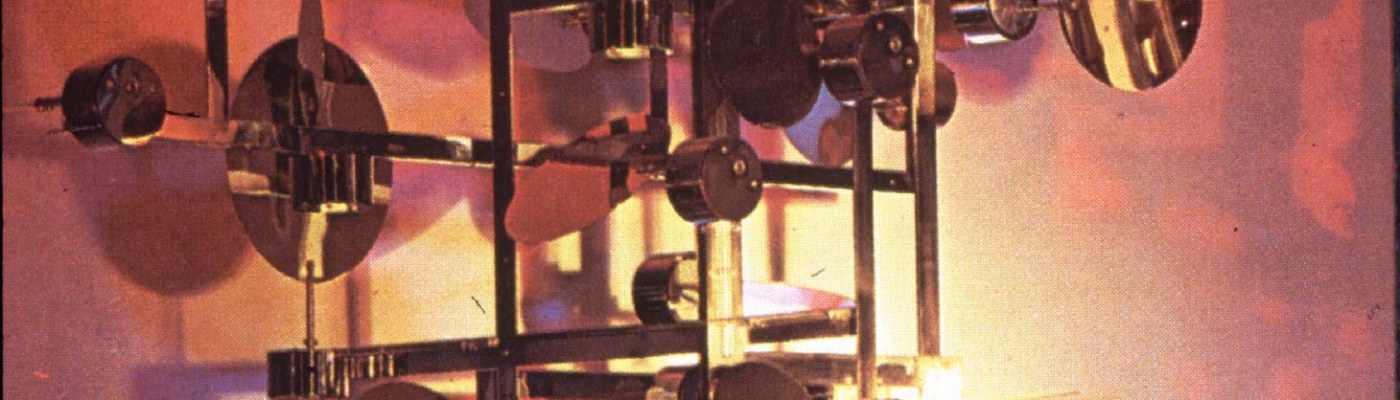
He did what he did every evening. It was a complete violation of protocol but he never varied from this pattern. It was his moment of silent rebellion, something he would never explain even if someone had asked him about it. No one ever asked him to explain. At 8.30 he walked from his room through the gates of the compound and stood outside listening to the wind. It was the sound that drew him, and he could pick it out from the street sounds of Kabul as easily as if it were an old friend returning from a trip. Each time he heard that soft, barely audible shush he could picture himself at 17, standing in front of the Chronos 8, his first love. He had first seen the Chronos 8 in Moscow at the annual science fair. It was one of the few times his father had had time to take him anywhere. He sat patiently through his father’s lectures on astronomy, met his colleagues, even sat through an interminable round table on Soviet engineering and the space travel. It was on the last afternoon of the fair, when he had free time to explore on his own that he came across the Chronos 8. It was beautiful, a kinetic sculpture of spinning mirrors and long extensions, dwarfing him yet embracing him at the same time. He could see his reflection in the mirrors, the green eyes that still showed flickers of emotion from certain angles. His hair was dark, still too long; his face still caught half way between being a child and a man. He was already learning to control his expressions, to absorb without responding.
Normally, confronted with anything mechanical, his first instinct was to take it apart and lay it out in neat patterns. He often drew his own blueprints for machines. He kept precise notebooks detailing his experiments with the boxes of metal and plastic that he collected from outside his apartment building and carefully formed into mechanical objects. But the Chronos was too beautiful to take apart. Each mirror spun at a slightly different speed to the one next to it, as if it were alive. The engine at its base was silent but each mirror spun with a soft whisper. As he listened, he began to hear the rhythm of it, beginning slowly building, falling away until it began all over again.
He had followed this solitary evening pattern for so many months now that the local traders no longer bothered trying to sell him drugs, women or weapons. He was obviously a lost cause as a customer. He could find any location in Kabul, blending in so cleanly that he was invisible. Tonight was no different from any other night. He walked quickly through the street, avoiding eye contact with the dealers who hung around the foreign compounds waiting patiently for the inevitable request. He passed by the small café and turned the corner, glancing swiftly at the reflective glass, just to make sure no one was following him. It was unlikely but he never took chances like that. He had been well trained during his years in the KGB, first by Viktor Khorestsky the legendary spy master and later by the man he was going to meet now.
II
“It is too late. You must think again” Orlov knew that was true but he still resisted admitting it to himself. He would deny his involvement until the very end; perhaps blame one of the others if he could get away with it. As always when he had a problem to figure out, he drew squares and circles on small pieces of paper. He never wondered why this should be so but he found the juxtaposition of shapes comforting. He disliked messiness, found emotional dramas not only exhausting but tedious. No good KGB operative leaked emotions. It was so unprofessional.
It was only necessary to re-order things so that they made sense again. It did not really matter if the sense they made was truth, lies or something some-where in the middle. Really, it was just like drawing a blueprint, he was fond of telling his students. He would unfurl his treasured copy of the Archigram 1967 blueprints at the front of the classroom at the beginning of each new term. He would pin them to the wall opposite the classroom door as the latest flock of students entered and took their places. The curriculum never changed ….history, political education, geography, languages, accents, acting, and communications skills. He knew it as well as his own life story. He never missed a step, never failed to recall a single date or place. If he had a particularly intelligent group, he would add in coding, dead letter drops and field exercises around Moscow. At the end of each term, he would announce the date of the final test. Invariably, year after year, the entire class would fail. He would be forced to re-test all of them until he had the required number of pass grades to ensure they went onto the next level.
He had so long ago resigned himself to the inevitability of this process that he never gave it much thought. That was perhaps why he missed it the first time around. At first he wasn’t sure he had seen it correctly. He checked again. No, it was definitely there. On page three, right in the middle of the exam paper was the most perfectly reproduced hand drawing of the Archigram diagram he had ever seen. True, the handiwork was slightly shaky, some of the lines just a little wobbly but it was the blueprint in all its detail. Next to it were the words “observe then explain”. He could hardly believe his luck. All these years and no-one had been able to answer that simple exam question; what was the most important thing you learned this term?
He checked the name on the exam paper. Konstantine Veritsky. Of course, it had to be him. He hardly looked Russian at all, although he spoke –when he did speak — with a born and bred Moscow accent, as pure as any Communist party official. Orlov struggled to recall anything about him or to remember who he associated with. He could not come up with a single instance where he had seen him enjoying the company of his friends, playing football, talking to anyone. It was as if everyone avoided him. He would never be a team player, never be part of the night-life on offer to the young KGB officers who would one day be part of the state’s most important apparatus. Veritsky, for his part, did not seem to be concerned with making friends. He had a habit of staring directly at someone for a long time before answering a question, as if debating with himself whether it was worth his time and attention or not. Invariably he would come up with a short, dismissive response that never quite crossed the line into being arrogant.
Now as he sat in the bar of the Kabul Hotel, he wondered if Veritsky had changed at all since the last time. He ordered a second drink, hoping this time the glass would be just a bit cleaner. He knew the vodka was fine ….perfect in fact. He supplied it himself to the hotel. Chronos 8 vodka. Just one of many lucrative sidelines he had developed since the war. War was so good for business, he thought. He hoped this one would go on for a long time.
Story to one day become a novel
 hollow places