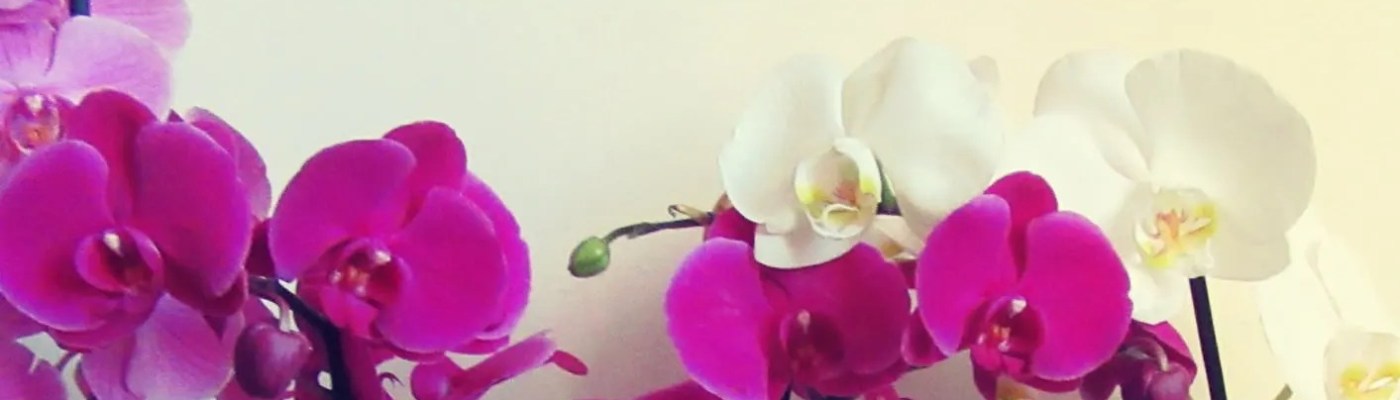
In Rex Stout’s evocative story, the Bashful Body, private consulting detective Nero Wolfe leaves his New York home to visit a renowned orchid grower in upstate New York. For Wolfe, an avid fan of orchids and their cultivation, the trip represents a pilgrimage of sorts. He is a recluse, but for the chance to acquire a rare orchid, he will leave his sanctuary and brave the long journey.
Wolfe is not alone in his obsession with orchids. The flowers have long fascinated people; they seem exotic, difficult to grow and prone to chills and disease. However, orchids have one of the most intelligent evolutionary systems in the plant world. Far from being only delicate hothouse flowers, orchids are tough little survivors with the deceptive guile of courtesans and the tenacity of Mafia dons.
Orchids are among the most highly evolved flowering plants in the world. There are 40,000 known orchids in the wild with more being discovered constantly. Humans have made many thousands more by cross-fertilization and experimental breeding. In 1678 botanist Jakob Breyne wrote that
“the manifold shape of these flowers arouses our highest admiration. They take on the form of little birds, of lizards, of insects. They look like a man, a woman, sometimes like an austere sinister fighter, sometimes like a clown who excites our laughter. They represent the image of a lazy tortoise, a melancholy toad, an agile ever chattering monkey”.
Orchids cannot self pollinate. In fact many of them would die if they their own pollen were to touch their stigma. Charles Darwin was bewitched by orchids and spent many years studying them. He saw in their infinite complexity the pinnacle of evolutionary transformation. In Darwin’s view, cross pollinating species always survived because they had so much new material to grow with down the generations. Cross pollinating plants must take complex forms, both to store pollen and to attract the insets that carry pollen from plant to plant in some form of cosmic ecstasy that is triggered by the way the earth tilts away from the sun.
In order to attract insects, orchids take on many forms. Orchids often look to insects like other insects so that pollen passes from plant to plant. Some orchids look like an enemy, something an insect wants to kill. Botanists call this pseudo-antagonism. Other orchids secrete nectar that entices insects to come closer. Lady slipper orchids have a complex set of pollen drenched threads that force insects to pass through a maze of sticky nectar and pollen until they can leave by the back of the plant. There are orchids that smell like chocolate and orchids that smell like rotting meat. Some shy orchids release nectar only at night so as to attract nocturnal moths. It is not clear whether insects evolved first and led the way for orchids or orchids took the lead along the evolutionary path but the intricate, delicate dance of pollination and fertilisation is so elegant and perfect that orchids must surely be one of the most creative members of the plant kingdom.
Orchids are lazy by nature. They flower on a whim and then rest for months. A pollinated seed pod will mature into a flowering plant over seven years. They grow in warm tropical soil and on tree fungus, in hothouses and rain drenched gardens. Epiphytic orchids grow at a tilt from the side of a tree or in the crevices of rocks, dangling their roots in the air and absorbing sunlight and rainwater and decayed leaves. Hurricanes can blow billions of orchids seeds thousands of miles so that rare orchids can suddenly, seven years later, appear as if by magic in alien soil. Orchids can live for generations, often lying dormant until the mood strikes them to unfurl their precise, colourful blossoms.
Orchids have evolved in ways that guarantee their survival in nature. They have also evolved in ways that ensure they resonate in the human imagination. Orchid collectors are obsessive, fixated, enduring. Orchids can drive people crazy. A collector in Japan resigned from a major corporate role, signed his assets over to his wife and retired to Malaysia to tend his orchids, which number close to two thousand. He was on his third marriage at that time. An American collector and his wife take separate holidays so that the orchids in his collection are never left unattended. He has built a special rooftop garden with its own ecosystem, ventilation and watering schedules, lighting designed to mimic changing cloud patterns, and a fan that mimics cool breezes at random times. A British explorer spent nine months in captivity in Colombia in his pursuit of rare orchids. He survived, wrote about his experiences and then went to the Asia Pacific Rim in search of new varieties.
Organised crime syndicates have sprung up to fuel the trade in wild orchids and to bypass laws banning the trade in rare or endangered species. Taiwan and Belize, neither of whom are signatories to the Convention on International Trade in Endangered Species are well known trading hubs for orchids from around the world. Thailand is the world’s largest exporter of cut orchids, often over 8,000 a month. Orchids continue to beguile the imagination of collectors and scientists. There are experiments to breed blue orchids in the wild. One devoted breeder is currently working to imbue orchids the glow in the dark properties of squid and other undersea creatures known for the phosphoresce.
Orchids have long symbolised a rare, unobtainable thing of beauty. Hollywood reporters noted that 1930s movie star Dolores Del Rio maintained her enviable beauty by dining on orchids and rare blossoms. Helena Rubenstein recounted the story of an ambassador’s wife who wanted eighteen pure white orchids woven into her hair each night for a series of dinner parties and would arrive at the salon each morning with the orchids packed in ice. Her china and her dresses were both made to showcase the orchids, native to her homeland. Perfumers were not immune to the orchids allure. In 1905, the House of Coty launched the perfume L’Origan, with heart notes of orchid and jasmine. It is often referenced as the inspiration for the 1912 Guerlain perfume, L’Heure Bleue. Jacques Guerlain is said to have been inspired by Impressionist painters in a wildly experimental pre-war Paris. The perfume encapsulates the limnal hour, “the blue hour” between day and night,that brings out the deepest sweetness of blooming flowers. L’Heure Bleue and L’Origan have orchids as heart notes, albeit orchids tempered by cedar, jasmine and ylang ylang. In 2006, Tom Ford launched Black Orchid, a dark moody perfume based on orchids blended with chocolate, caramel and jasmine. It is a perennial best seller. In 2014, he followed it up with Velvet Orchid, a gourmand blend of orchids, honey and rum splashed with mandarin orange.
Orchids have long fascinated people, turning them into obsessive collectors, voyeurs, scientists, traders, and criminals. Orchids are not always beautiful and not always rare. Carefully breed and genetically modified orchids are everywhere, and are hardier and more resistant to disease than natural orchids. Orchids have been around for thousands of years, and will likely be around for thousands more. Kew Gardens, in an age of digital photography and social media, employs two artists to create paintings of new species of orchids so as to capture the essence of their being. In February 2015, botanists from Kew risked their lives to bring back a new orchid from the killing fields of Cambodia. It bloomed alone in the Cardomom Mountains, which is littered with landmines. It is yet to be named. Orchids, they live by their own rules.
 hollow places