Wisdom keepers are the guardians of the sacred and the true, often lonely voices in an increasingly loud and shrill world. Chief Oren Lyons, of the Turtle Clan of Onondaga, First Nations Peoples, is one such voice and he sounds a warning that the earth has entered a period of degradation. There are two signs in Onondaga narratives to show when such a time has begun; the first is the acceleration of the winds, and the second is the mistreatment of children. Scientists say that the earth is in its sixth period of extinction, noticeable for the massive loss of species and habitats. Millions of people, made homeless and nameless by our governments fascination with the mechanics of control and killing, tramp around the planet looking for a place to rest and breathe. Animals whose names we don’t even know, disappear daily from the global ecosystem.
Unlike dinosaurs, we humans have added our own unique stamp to this process of extinction. We have exploited, commoditised, divided and developed the planet is so many ways that it cannot regenerate on its own. We employ sciences based on dissection and the division between left brain and right brain understanding, politics and religions based on inclusion and exclusion, conceptual paradigms that rip the sacredness from seasonal changes, ocean tides, and living systems and turn them into recalcitrant children who must be beaten down into obedience and value generation. Militarism stalks the world, enslaving and executing as it goes, an angry random scything in all directions that leaves great holes in our cultures and societies, and deep wounds on the earth. The same ethos that tells us we have the right to uproot ancient forests confirms that we have the right bomb the homes of distant people whose language and gods are different. We buy and sell other human beings at bargain prices and wonder why both our societies and our ecosystems are so troubled and fragile.
And so we stand, in the early part of the twenty-first century, facing an annihilation primarily of our own making, silenced by the enormity of it all, uncertain what to do next. The environmental degradation and the relentless loss of species are the great wounds of our world and in the face of such pain, government and people are voiceless. Each tiny plot of indigenous land, already squeezed between governments and corporations becomes a new, temporary battleground between those who have and those who have not. Our interconnected technologies help to publicize grievances and photogenic media opportunities from the Amazon, the edge of the Arctic, the islands of the Asia Pacific Rim before we move on to the next cause. Militant environmental groups become adept at Power Point presentations and consensus just as government agencies form closer bonds with the big businesses who need to utilize the land for profit and use it to discard industrial effluents, toxic waste and other unknown substances.
Along the sites of gold mines in Canada, the fine layers of arsenic dust that are a by-product of the refining process, have settled in the river ways and snow banks, seeping inexorably outwards as the snow melts. The solution was to pump the arsenic downwards, deep into the earth’s underground waters, those waters that fuel seed germination, tree roots, and tiny life forms that live below the surface. In the Philippines and the Amazon Basin, reclamation of the land for exportable crops, illicit logging, and industrial uses has changed the landscape and the forest patternings that regulate the local temperature and rainfalls. In the Congo, the introduction of non-native aggressive fish destroyed both local biodiversity and livelihoods of fishing communities. Cambodian land grabs in Rantanakiri have caused devastating consequences for local people as they battle international companies to keep communal lands free and to avoid the fate of so many rural workers who end up as urban slum dwellers on minimum wages with all the health, sanitation, and social problems that come from poverty and disenfranchisement.
Habitats disappear and ecosystems disintegrate under the weight of commodification and unequal development; indigenous peoples are lost to urban poverty along with their rights and their earth bound wisdom. At the front lines of our war to subdue the earth are cancer cities in China, urban collectives in the Philippines, Bangladesh and Haiti where children support the family by picking rubbish from dump-sites, slave markets across the world where women and children are sold to sex traffickers and organised crime groups who trade them as depreciating assets in the parallel economies that support so much of our world, and in the heart-breaking silences of millions of men who labour relentlessly in the cities and factories and mining sites, who lose their chances for love and happiness, for health and old age.
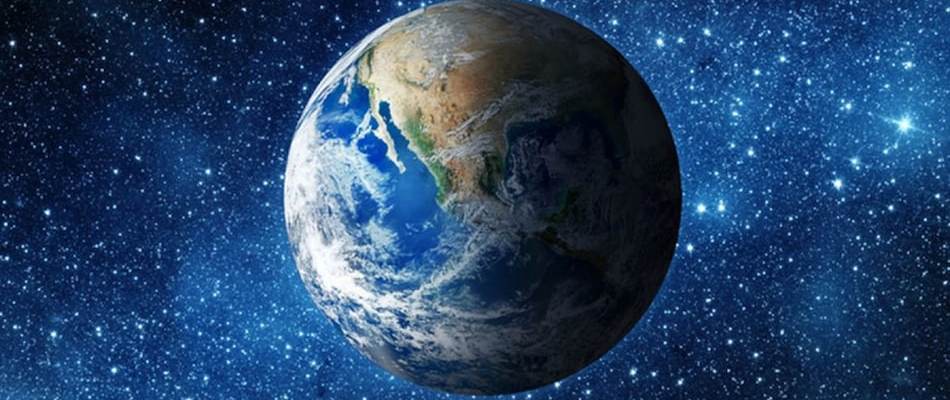
In the face of political narcolepsy and large scale disinterest, we have no further choice but to turn to the wisdom keepers of our world and to see in our beautiful, vulnerable planet the markers of our salvation, the energetic systems of wind and sea and seasons that tell the truth about our interconnectedness and our evolutionary need to tip towards collaboration, compassion and regeneration. Whether we chose the principles of engaged Buddhism, born in the experience of the Vietnam War or the neuroscience of happiness currently under study by Dr Ranghunathan and others, or the raft of sciences, arts and mindfulness practices that are emerging as part of the new field of Spiritual Ecology, we begin where we stand. Into the dominant global narrative of violence, fear and terror, we insert compassion for the stranger, environmentally mindful business and political practices, and the use of technologies that favour openness and communication over surveillance and censorship. It is the beginning of what Joanna Macy calls the ‘Great Turning’ , a shift from political economies based on power blocs, pillaging of natural resources, and profits limited to elites, and towards life sustaining communities and societies that use technology to protect the world’s ecosystems and vulnerable peoples and to generate economic models and revenue streams that ensure clean waters, sustainable agriculture and commercial practices that reflect inclusive growth. The urban gardener gangstas who turn dying city streets into food producing collectives, the scientists that work on affordable techniques for devastating illnesses and lost limbs, and the philosophers who use the internet and blogging to amplify the earth’s cries all form part of the Great Turning. We cannot declare our living, breathing earth and its inhabitants to be dead matter for consumption and then believe that we can live from that consumption in ways that guarantee our survival. In New Orleans, devastated by floods and with its soul ripped out by poverty, mismanagement and disinterest, new music and business and art now flourishes. People who fled have returned to set down roots again. We can help those who struggle, not just in distant wars and disaster zones, but here, where we live, where we make our communities. We must form that critical mass of tenderness, life and compassion that will tip us outwards from the current global trajectories of death, war and anger and into life sustaining places and lives, into our human connectedness to the web of life. We must make a run for the wild free spaces and pull someone along with us on the journey, run from mendacity and condescending philanthropies, run like hell for home…”that pale dot, the only home we have ever known”.
 hollow places